Sleep
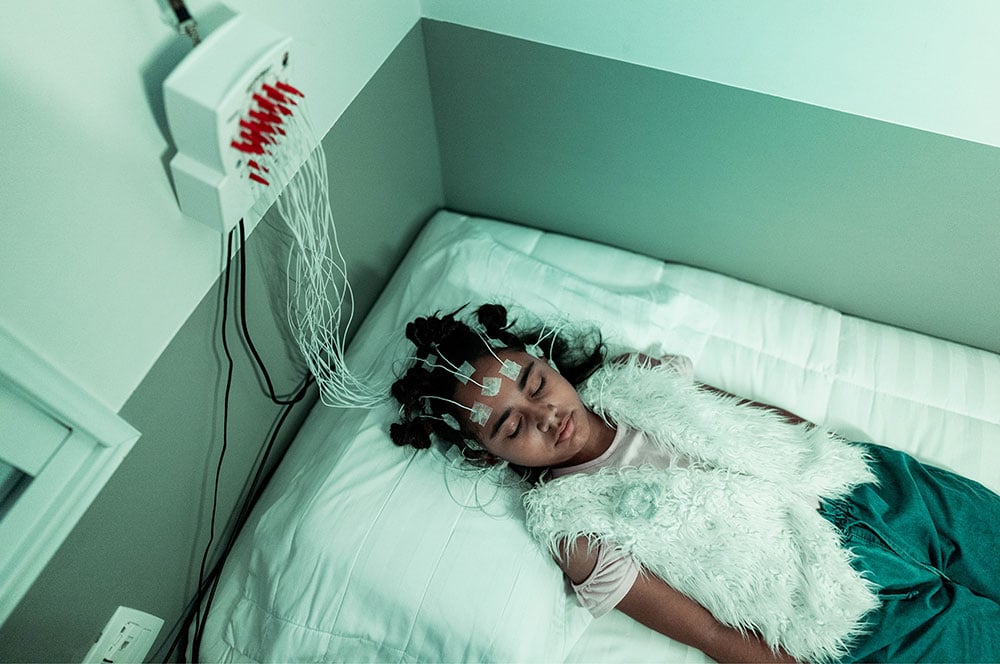
Sleep problems are very common with Autism, and they can be especially challenging for families of individuals with profound Autism. Research shows that more than 80% of autistic individuals experience significant sleep disturbances—two to three times higher than in neurotypical peers—such as trouble falling asleep, waking during the night, or rising too early. For those with profound Autism, these issues can be even more severe. One study tracking over 20,000 nights found that disrupted sleep predicted daytime behavior changes in 81% of individuals with Level 3 Autism, affecting mood, behavior, and safety.
Poor sleep doesn’t just affect the individual; it can also lead to increased aggression, hyperactivity, and inattention, while placing strain on caregivers and disrupting family routines. In addition, medical conditions like sleep apnea, seizures, and reflux—more common in profound Autism—can contribute to or worsen sleep problems and sometimes mimic behavioral symptoms. Understanding these connections is the first step toward finding practical solutions and improving the quality of life for the whole family.
Sleep problems in individuals with profound Autism can have many causes. Biological factors such as differences in melatonin production, irregular circadian rhythms, and genetic influences often play a role. Medical conditions like sleep apnea, seizures, gastrointestinal reflux, and chronic pain can further disrupt sleep. Sensory sensitivities—such as discomfort with bedding, temperature, or noise—can make settling difficult, while anxiety and behavioral challenges can compound the issue. Because these factors often overlap, addressing sleep problems requires a comprehensive approach that considers both medical and behavioral contributors.
Behavioral support from experienced agencies, such as those listed in this guide, can assist. You can also speak with your primary care physician or pediatrician, who can rule out medical conditions such as sleep apnea, seizures, or reflux.
Children’s Hospital Los Angeles-Pulmonology and Sleep Medicine
https://www.chla.org/pulmonology-and-sleep-medicine/programs-and-services/sleep-center
Los Angeles – (323) 361-2287
A team of pulmonology and sleep medicine specialists diagnoses and manages a wide range of breathing, lung, and sleep issues, including common and rare sleep disorders in infants and children. Team is especially skilled at diagnosing sleep issues in children who have developmental or medical concerns, such as Autism or Down syndrome. Their Sleep Center is one of the region’s largest, most experienced centers for diagnosing sleep disorders in children. It also conducts sleep studies for children who require ventilator support. Requires a physician referral. Major PPO plans and Medi-Cal accepted.
Dr. Gary Feldman- Stramski Children’s Developmental Center
millerchildrens.memorialcare.org/specialties/stramski-childrens-developmental-center/sleep-disorders-center
Long Beach – (562)728-5034
Dr. Feldman has been the medical director of the Stramski Children’s Developmental Center at Miller Children’s & Women’s since 2004.
Loma Linda University-Children’s Hospital
https://lluch.org/neurology/our-services/pediatric-headache-sleep-autoimmune-disorders/sleep-disorders
Loma Linda – (909) 835-1810
Pediatric Neurology for consultation. Treats the following: sleep disorder, sleeping, excessive daytime sleepiness, insomnia, parasomnia, and other disorders. The referring physician must send clinical notes to the department. A sleep study clinic is also available. Must have preauthorization from HMO and PPO plans. Most PPO plans and Medi-Cal are accepted.
Progressive Neurology & Sleep Medicine Associates- Dr. Pei Simon Liu, M.D., M.S.
https://progressiveneuroandsleep.com/team/pei-simon-liu-m-d-m-s/
Redlands and Riverside – (951) 785-7190
Progressive Neurology & Sleep Medicine Associates is a Neurology and Sleep Medicine provider. Our providers are here to help adult and pediatric patients with neurologic and sleep issues, including diagnoses and treatments for Tremors, Sleep Apnea, Multiple Sclerosis, Dementia, Epilepsy, Headaches, Neuromuscular disorders, and other neurological disorders. They also perform neurologic testing, including EMG and Nerve conduction studies, EEG, and sleep studies with and without C-PAP.
Rady’s Children Health-CHOC Pediatric Sleep Center
https://choc.org/sleep/
Orange – (714) 364-4151
CHOC Pediatric Sleep Center focuses on identifying the physical or behavioral factors that affect sleep, including obstructed airways and breathing issues, as well as conditions such as apnea and narcolepsy. Provides specialized treatment, sleep studies, and close follow-up care. Must have a referral from a primary physician. Major PPO insurance and Medi-Cal accepted.
Sleep and CPAC Center
https://sleepandcpapcenter.com/
Rancho Cucamonga – (909) 987-3535
Serves adults and children. Sleep diagnostic centers are open 7 days a week. Also provides in-home patient sleep studies, as well as CPAP and Bi-PAP services and supplies for adults. Major PPO and HMO plans accepted (referral required), please call to verify. IEHP also accepted.
UCI Sleep Medicine Services
https://www.ucihealth.org/medical-services/programs/sleep-services
Irvine – (714) 509-2230
UCI Health Sleep Medicine specialists have advanced training in a variety of medical specialties and use leading-edge technologies to diagnose and treat the causes of poor sleep.
UCLA Health- Sleep Medicine
https://www.uclahealth.org/medical-services/sleep-medicine
Los Angeles – (310) 825-2631
Leaders in managing and treating all types of sleep disorders, including cutting-edge treatment for insomnia and narcolepsy, offer the full range of care for children and adults, including Pediatric and Pulmonary Clinics. A primary care physician or a community subspecialist must refer patients. UCLA Health accepts most major health insurance plans, including HMO, PPO, and Medi-Cal.
UC San Diego
https://health.ucsd.edu/care/sleep-medicine/
La Jolla – (844) 757-5337
Our sleep medicine team includes board-certified doctors in their specialties, as well as nurse practitioners. They use leading-edge technology to collect precise information about a person’s sleep movements, behaviors, and breathing patterns. These details help us identify even minor sleep abnormalities. Most PPO plans and Medi-Cal are accepted. Adults only. Referral required from primary physician.
Autism Society Options Policy
This Resource Guide was developed to provide families and professionals with an opportunity to find resources related to autism in the Inland Empire in one place.
All information provided or published by the Autism Society Inland Empire is for information purposes only. Specific treatment, therapy or services should be provided to an individual only at the direction of the individual’s doctor, caregiver, or other qualified professional. References to any treatment or therapy option, program, service, or treatment provider are not an endorsement by the Autism Society. References of treatments, therapies, programs, services, and/or providers are not intended to be comprehensive statements. You should investigate alternatives that may be more appropriate for a specific individual. The Autism Society assumes no responsibility for the use made of any information published or provided. The Autism Society Inland Empire provides information, but it does not constitute medical or legal information. Referrals provided are suggestions to organizations that might help, but do not constitute a recommendation. The Autism Society Inland Empire cannot be held responsible for consequences that arise from individual dealings with a professional or organization. The inclusion of any organization does not imply endorsement, and omission does not imply disapproval. The Autism Society Inland Empire may add or remove organizations from this list at its discretion.